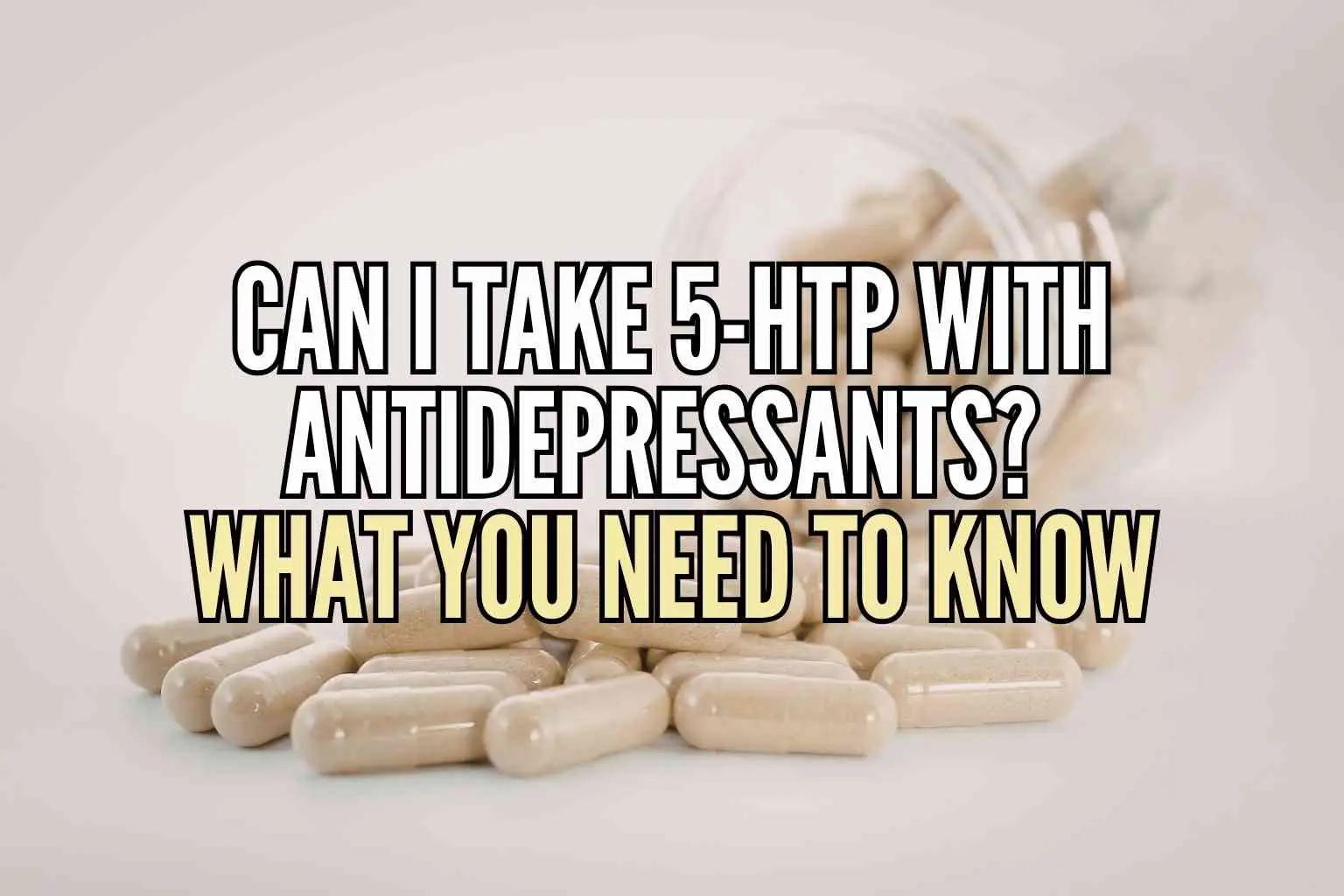
Taking 5-HTP with antidepressants is not recommended without direct physician supervision — and in several specific combinations, it is contraindicated entirely. The reason is serotonin syndrome: a condition caused by excess serotonergic activity in the nervous system that can range from mild symptoms like agitation and tremor to severe outcomes including rapid heart rate, high fever, and loss of coordination. 5-HTP increases serotonin production upstream. Most antidepressants increase serotonin availability downstream by preventing its reuptake or breakdown. When both mechanisms are active simultaneously, serotonin can accumulate to dangerous levels. This is not a theoretical risk — it is the primary safety concern flagged by every major clinical pharmacology reference on 5-HTP.
The question is not whether the risk exists. It is which combinations carry it and what the realistic options are.
5-HTP With Antidepressants: What the Research Shows
Serotonin syndrome from combining serotonergic supplements with prescription medications is well-documented in the clinical literature. The risk is highest with monoamine oxidase inhibitors (MAOIs) — which block serotonin breakdown entirely — and remains significant with SSRIs, SNRIs, and tricyclic antidepressants, all of which elevate synaptic serotonin through reuptake inhibition. Adding 5-HTP to any of these regimens adds serotonin precursor load on top of already-elevated serotonin availability, compressing the margin before toxicity becomes a clinical concern.
A 1991 case series published in clinical pharmacology literature documented serotonin toxicity in patients combining serotonergic compounds without adequate medical oversight. More recent pharmacology reviews consistently classify the 5-HTP and MAOI combination as contraindicated and the 5-HTP and SSRI combination as requiring close medical supervision before any combined use is considered.
The mechanism is specific and the risk is dose-dependent — but neither fact makes unsupervised combination safe.
Factors That Affect the Risk of Taking 5-HTP With Antidepressants
The class of antidepressant. MAOIs carry the highest risk and represent an absolute contraindication with 5-HTP. SSRIs and SNRIs carry a significant but lower-grade risk — one that requires physician evaluation before any combined use. Tricyclic antidepressants fall into the same supervised-use category as SSRIs.
The dose of 5-HTP. Risk scales with dose. Higher 5-HTP doses load more serotonin precursor into a system already under pharmacological serotonin pressure. Even doses considered low for standalone use can become problematic in combination.
Other serotonergic substances in the stack. The interaction risk compounds when additional serotonergic compounds are present — including tramadol, triptans used for migraine, dextromethorphan in cough medicines, and herbal supplements including St. John’s Wort and SAM-e. Combining 5-HTP with antidepressants alongside any of these raises risk further.
Timing of discontinuation. MAOIs require a washout period of at least two weeks after discontinuation before any serotonergic supplement can be considered. Starting 5-HTP during a medication transition — even after stopping an antidepressant — requires medical guidance on the appropriate interval.
What To Look For If You Are Exploring Natural Sleep or Mood Support
If you are currently on antidepressant therapy and exploring complementary support, the safest first step is a direct conversation with your prescribing physician about what is permissible alongside your current regimen.
For people who are not on prescription antidepressants and are looking for natural serotonin pathway support, the relevant quality markers in a 5-HTP supplement are a standardized Griffonia simplicifolia extract, transparent dosing, and ideally the inclusion of vitamin B6 as a conversion cofactor. A formula that pairs 5-HTP with non-serotonergic sleep botanicals — such as valerian and hops, which act through GABA rather than serotonin — avoids stacking serotonergic mechanisms and reduces the overall interaction surface.
Sleep Lean combines 5-HTP from Griffonia simplicifolia with valerian root, hops, and berberine — a formula built around complementary rather than redundant mechanisms. For a full breakdown of the ingredients and who the product is designed for, read the full review of Sleep Lean.

Bottom Line – 5-HTP With Antidepressants
5-HTP with antidepressants is a combination that requires medical oversight — not as a precautionary disclaimer, but because the pharmacological interaction is real, specific, and carries documented risk at the level of serotonin syndrome. MAOIs represent an absolute contraindication. SSRIs, SNRIs, and tricyclics require direct physician involvement before any combined use is considered. If you are not on prescription antidepressants and are exploring 5-HTP for sleep, mood, or appetite support, the safety profile at standard doses in otherwise healthy adults is considerably more favorable. The key distinction is whether a serotonergic medication is already in the picture — and that is a question only your physician can evaluate properly.
For the complete safety and dosage guidance on 5-HTP, including interactions, side effects, and the full evidence breakdown, visit our 5-HTP benefits post.
Looking for more answers about 5-HTP? You might also find these useful:
— How long does 5-HTP take to work? — if you are cleared to use 5-HTP, this covers realistic timelines by goal.
— Best time to take 5-HTP for sleep, mood, and weight loss — timing protocol by goal, relevant for anyone starting supplementation after medical clearance.
This post is for informational and educational purposes only. It does not constitute medical advice and is not a substitute for consultation with a qualified healthcare provider. Individual results vary. If you are pregnant, nursing, taking prescription medications, or managing a diagnosed health condition, consult your physician before adding any new supplement to your routine. These statements have not been evaluated by the Food and Drug Administration. This product is not intended to diagnose, treat, cure, or prevent any disease.